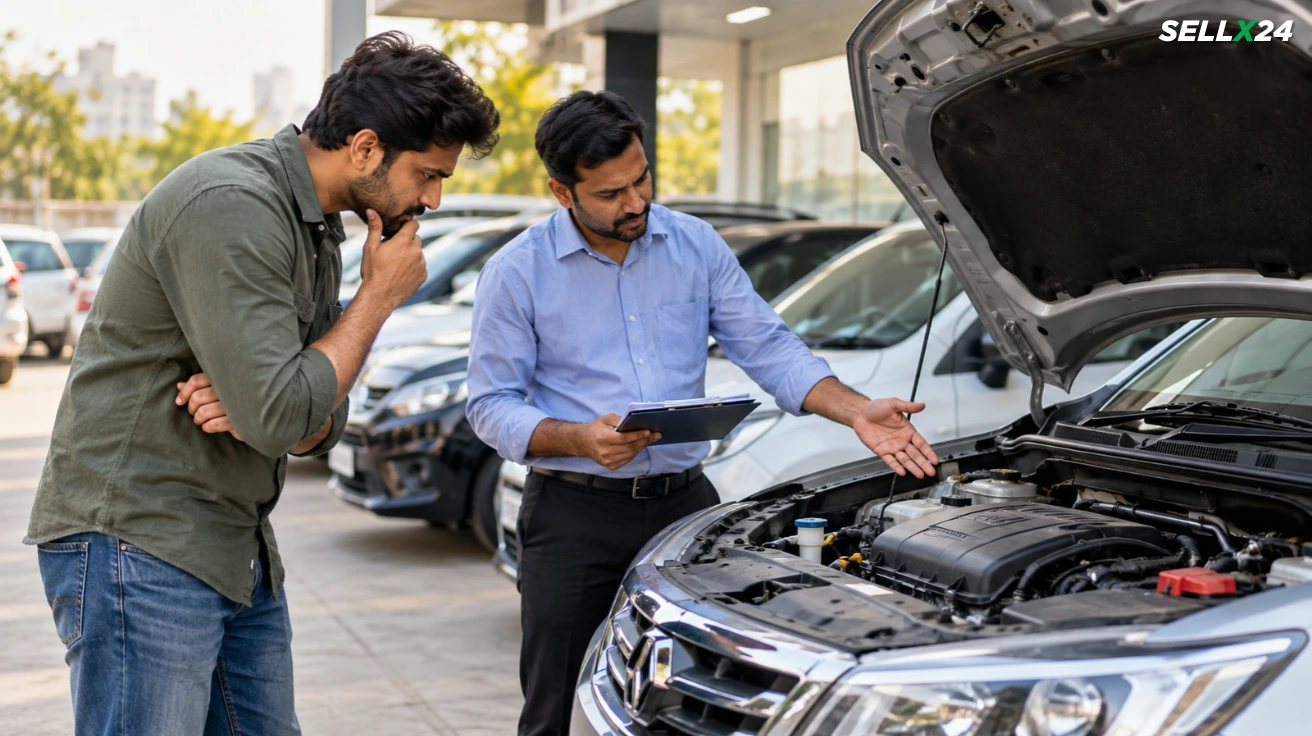
Buying a used car in India can be exciting, but it also comes with questions. Who really owns the car? Has it been in an accident? How many kilometers has it run? These are details you cannot ignore if you want to make a safe purchase. Luckily, there are reliable ways to check car owner name and other critical details through official portals, documents, and inspections. Let’s break this down step by step so you know exactly what to look for and how to do it right.
Why It’s Important to Check Car Owner Name
The first thing any buyer should confirm is the registered owner of the vehicle. The name on the Registration Certificate (RC) should match the seller’s identity. If it doesn’t, you may be dealing with a broker or worse, a fraudulent listing. Verifying ownership protects you from legal disputes, unpaid loans on the car, and future headaches at the time of transfer.
The Government of India provides easy online access for this. The Ministry of Road Transport and Highways (MoRTH) has a portal called Parivahan. You can visit the official Parivahan website or download the mParivahan app. By entering the registration number, you can check car owner name, registration date, RTO details, and vehicle class.
If you want an extra layer of certainty, you can request the seller to show you the original RC card and a government ID. The RC will clearly mention the owner’s name, fuel type, and chassis number.
How to Check Car Mileage Accurately
Once ownership is clear, the next big question is mileage. Many buyers worry about odometer tampering. That’s a real issue in the used car market, so knowing how to check car mileage correctly is essential.
Here’s the thing: don’t just trust the numbers on the dashboard. Cross-check with the car’s service history. Every time a car goes for servicing at an authorized center, the mileage is recorded. If the RC or insurance papers show a five-year-old car but the odometer reads only 15,000 km, that’s suspicious.
You can also look for physical signs. Worn-out pedals, faded steering wheels, or sagging seats usually indicate higher usage. A car showing very low mileage but heavy wear inside is a red flag.
Why You Must Check Car Service History
Mileage alone doesn’t tell the whole story. A car with moderate kilometers but poor maintenance can give you endless trouble. This is why you should always check car service history before making a deal.
Most authorized service centers in India now keep digital records. If the seller has always serviced the car at an official workshop, you can request a full report. It includes details of oil changes, part replacements, accident repairs, and recalls. Even if the seller went to local garages, ask for bills. A genuine owner will not hesitate to share these.
Checking service history gives you confidence that the car has been cared for. It also helps you estimate upcoming expenses. For example, if the last record shows a timing belt replacement, you won’t need to worry about that cost soon.
How to Check Manufacturing Date of Car
The year of registration and the year of manufacture are not always the same. Sometimes cars remain unsold for months before they are registered. To know the actual age, you need to check the manufacturing date of the car.
The easiest way is to look at the vehicle identification number (VIN). This is stamped on the chassis and mentioned in the RC. The 10th character of the VIN often indicates the manufacturing year. For example, the letter K may represent 2019, while L stands for 2020, depending on the manufacturer’s coding.
You can also find the manufacturing month and year on a small sticker inside the driver’s door frame or under the bonnet. Why is this important? Because the resale value, insurance premium, and upcoming maintenance schedules depend on the actual manufacturing date, not just registration.
How to Check Car Battery Health
Batteries are often ignored during inspections, but a weak battery can leave you stranded. If you’re evaluating a used car, learning how to check car battery health is a smart move.
A standard car battery lasts 3 to 5 years. Check the date stamp on the battery itself to know its age. Many batteries have small indicator windows showing charge status: green usually means good, red or white means weak or discharged.
If you want a precise reading, use a multimeter. A healthy battery should read around 12.6 volts when fully charged. Authorized workshops can also run a load test, which shows how the battery performs under stress. This is especially important if the car has been idle for long periods.
How to Check Car Accident History
A shiny exterior can hide a lot of damage. To protect yourself, learn how to check car accident history before closing a deal.
Start with the service history, which often records insurance claims and major repairs. Then check the insurance company’s claim history linked to the car’s registration number. Some insurers allow buyers to request this data with the seller’s consent.
Physical inspection also helps. Look for mismatched paint shades, uneven panel gaps, or weld marks on the chassis. Even the spare wheel compartment can reveal signs of collision repairs.
If you want a professional opinion, take the car to a trusted mechanic or get a pre-purchase inspection from companies that specialize in accident history checks. Knowing whether a car has been in a major accident gives you bargaining power and protects you from unsafe purchases.
Other Useful Checks Before Buying a Used Car
While ownership, mileage, service records, manufacturing date, battery, and accident history are the core checks, don’t stop there. Consider these as well:
-
Insurance validity: Ensure the policy is active and transferable.
-
PUC certificate: Check pollution compliance.
-
Loan status: Verify that there is no active hypothecation with a bank.
-
RC authenticity: Cross-check RC details with the chassis and engine number.
-
Tyre condition: Worn tyres may mean an immediate replacement expense.
Each of these points adds to the overall picture of the car’s health and legal standing.
Step-by-Step Summary
Let’s quickly recap the process:
-
Check car owner name on Parivahan or mParivahan.
-
Verify the original RC and seller’s ID.
-
Check car mileage against service records and physical wear.
-
Check car service history for regular maintenance and repairs.
-
Check manufacturing date of car through VIN and stickers.
-
Check car battery health using a date code, indicator, or multimeter.
-
Check car accident history via insurance records and inspection.
-
Confirm supporting documents like insurance, PUC, and loan clearance.
Following this checklist gives you clarity and bargaining power.
Why Doing This Research Matters
A car is not just about transport. It’s an investment, and in India, it often holds family memories for years. Rushing into a purchase without verifying details can cost you financially and emotionally. The good news is that all the methods we’ve discussed are straightforward, and most of them don’t even cost money.
What this really means is that with a little homework, you can avoid scams, negotiate confidently, and drive home a car that matches your expectations.
Also Read: Check Car Insurance Online: A Complete Guide
Final Thoughts
The process of buying a used car in India has become easier with digital tools, but the responsibility to verify still lies with the buyer. Once you know how to check car owner name, mileage, service history, manufacturing date, battery health, and accident history, you are no longer buying blindly. You are making an informed choice.
And that’s the key. When you walk into the deal with knowledge, you protect yourself, save money, and ensure that the car you pick is truly worth it.