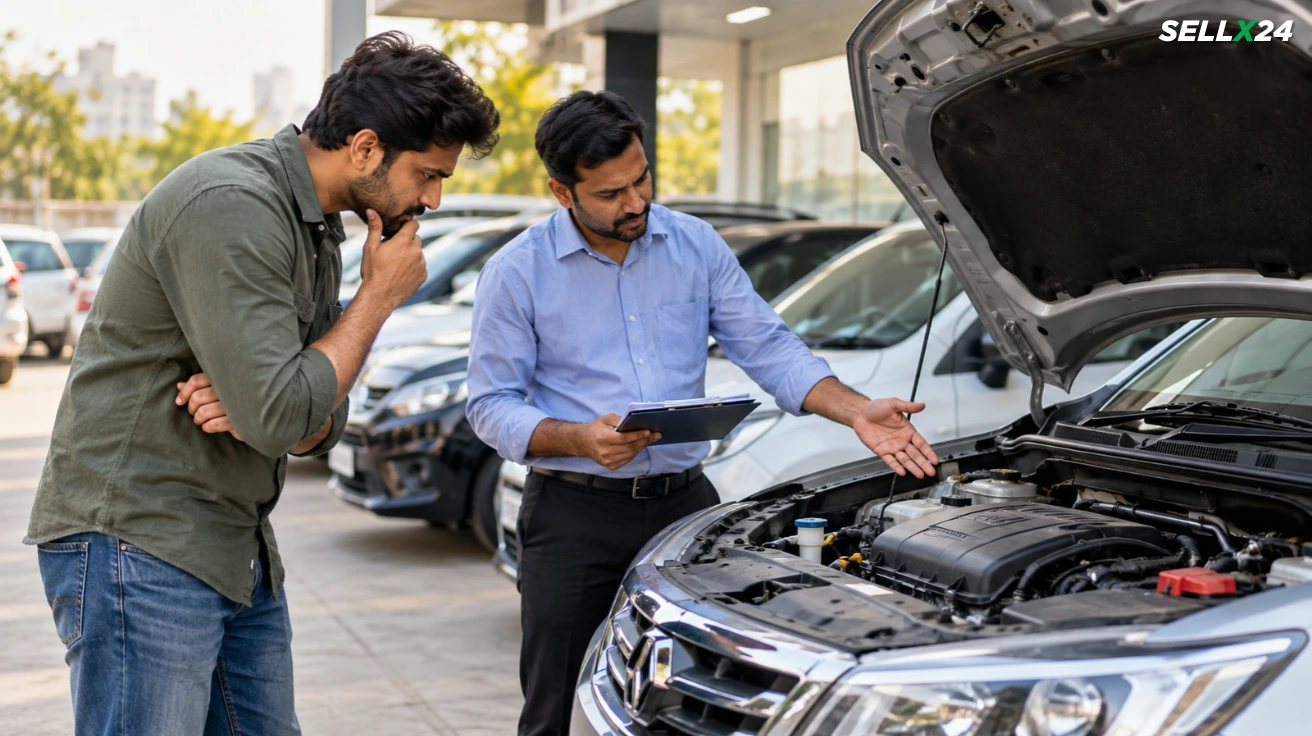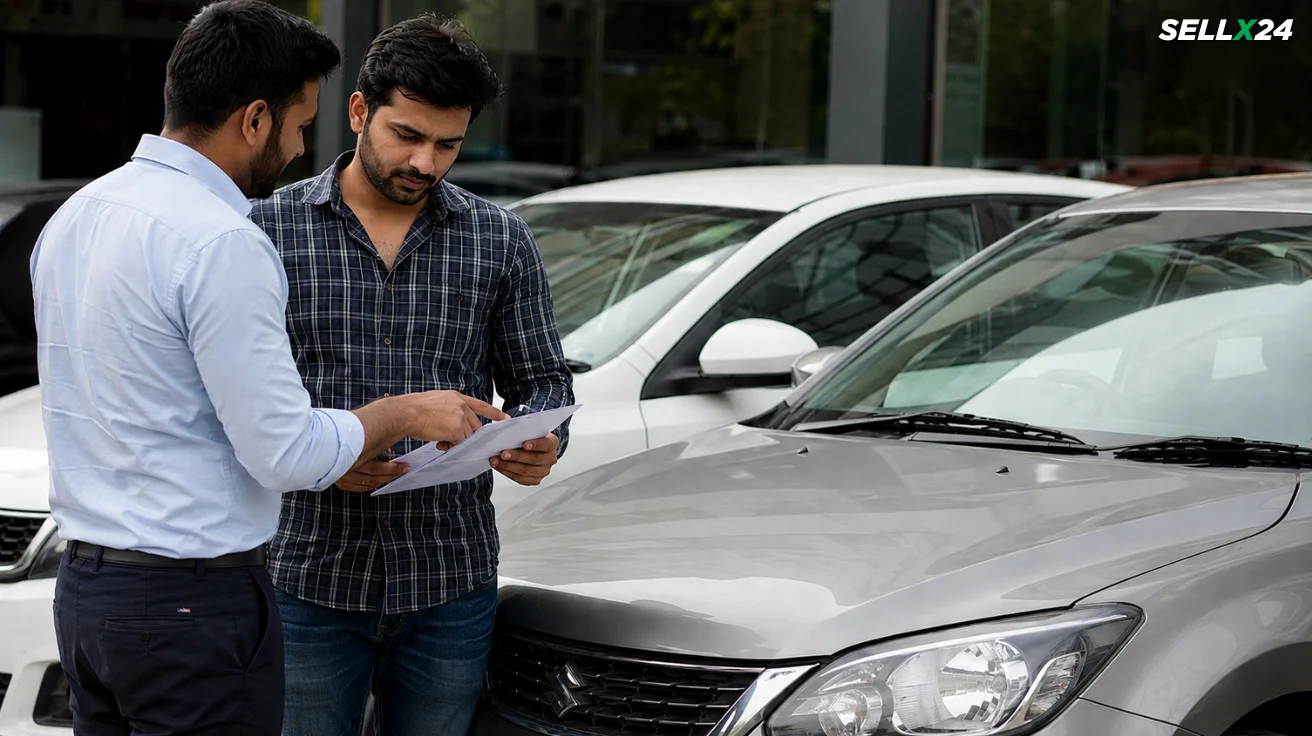
How to change ownership of a car is not complicated if you follow the process in order. Most delays, disputes, and hidden costs come from missing paperwork, unclear fee structures, or not tracking progress after submission. This guide walks you through the full workflow, including documents, online and offline methods, fees, tracking ownership status, and smart ways to avoid common mistakes.
Why Car Ownership Transfer Matters
When you sell or buy a used car, the law does not consider the deal complete until the registration certificate (RC) is officially updated in the new owner’s name. Until then, the seller remains liable for traffic violations, insurance claims, criminal misuse, and even accidental damages. For the buyer, skipping transfer means no legal claim on the vehicle, difficulty renewing insurance, and possible rejection during resale. What this really means is ownership transfer protects both sides from risk, not just paperwork fatigue.
Key Terms You Should Know
- RC (Registration Certificate): Proof of vehicle registration issued by RTO/DMV.
- Form 29 & 30: Core application forms for transfer of ownership in India.
- NOC (No Objection Certificate): Required if the vehicle moves between states or is under loan.
- Hypothecation: Term used when the car is financed and the lender’s name is on the RC.
- PUC (Pollution Certificate): Mandatory for transfer in India.
- Challan: Traffic violation fine. Must be cleared before transfer.
- IDV: Insured Declared Value for insurance. Not the same as ownership.
How to Change Ownership of a Car (Offline Method)
Let’s break it down into clear stages.
1. Clear Pending Dues First
Check and pay all pending challans, parking fines, toll penalties, or road tax arrears. If the car has an active loan, the seller must request the bank to close the loan and issue a clearance letter. Without this, transfer stalls at verification.
2. Collect Mandatory Documents
Both buyer and seller should prepare these:
- Original RC
- Insurance policy (valid)
- PUC certificate
- Aadhaar card or any government ID proof of both parties
- Address proof of buyer
- Passport size photos of buyer
- Sale agreement (signed by both)
- Form 29 and Form 30 (signed by both)
- Bank loan clearance letter or NOC if hypothecated
- Chassis imprint or pencil print (required in some RTOs)
Here’s the thing, the forms must carry original signatures. Photocopies or mismatched sign formats often get rejected.
3. Submit at the Local RTO/DMV
The buyer (or seller on buyer’s behalf, if agreed) submits the file at the RTO along with applicable fees. The RTO verifies the vehicle, documents, chassis number, and conducts background checks for theft or legal disputes.
4. Vehicle Inspection (If Required)
Some RTOs may ask for physical inspection. The car is checked for chassis match, engine number, and condition compliance.
5. Receive Acknowledgment Slip
After submission, you receive an acknowledgment slip or reference number. This number is the key to track car ownership transfer status later.
Online Transfer of Car Ownership
Online transfer of car ownership is now available in most Indian states through the Parivahan Sewa portal and select state transport websites. The process is similar to offline but initiated digitally.
Steps for Online Transfer
- Visit the Parivahan Sewa website.
- Select Online Services → Vehicle Related Services.
- Enter the vehicle registration number and chassis number.
- Choose Transfer of Ownership.
- Fill Form 29 & 30 digitally, upload scanned documents.
- Pay fees online.
- Book inspection slot if the system asks for it.
- Submit application and download acknowledgment.
What this really means is online submission saves queue time, but verification rigor remains unchanged. You still must clear dues, attach correct scans, and show up for inspection if requested.
Car Ownership Transfer Cost
Car ownership transfer cost varies based on state, vehicle age, and whether the transfer is within the same state or interstate. In India, the cost typically includes:
- Ownership transfer fee
- Smart card/RC reissue fee
- Postal charges
- Hypothecation removal fee (if applicable)
- NOC fee (if interstate or loan-related)
- Agent charges (optional, not mandatory)
For standard same-state transfer of a private vehicle, fees generally fall between INR 300 to 1,500 depending on the RTO. Interstate transfers cost more because of NOC and potential road tax adjustments. Hypothecation removal adds a small additional charge. If you use an agent, service fees can range INR 500 to 2,000+, but this is optional.
Car Ownership Transfer Status
Car ownership transfer status can be checked online using the application reference number. On the Parivahan portal, you can track:
- Application acceptance
- Verification stage
- Inspection pending/completed
- RC dispatched
- Delivery status
Some states also provide SMS-based updates. If your RC is dispatched, you will see a postal tracking number. This status check is crucial. Many buyers assume silence means approval, it often means a verification step is stuck.
How to Check Car Ownership Transfer Status Online
- Open Parivahan Sewa.
- Click Application Status under the menu.
- Enter the reference number.
- View current progress.
If the RC has been dispatched, use the postal tracking number shown on the screen to monitor delivery.
Online Transfer of Car Ownership (State-to-State Scenario)
If the vehicle moves to another state, you must:
- Generate NOC from the original RTO
- Submit Form 28 (NOC request)
- Present loan clearance/NOC from bank if hypothecated
- Re-register the car in the buyer’s state RTO
- Pay road tax difference if applicable
The NOC process itself can be initiated online in many states, but approval still happens at the original RTO.
Car Ownership Transfer for Loan-Financed Cars
A financed car has the lender’s name on the RC under hypothecation. Before transfer:
- Close the loan at the bank.
- Request a loan closure/NOC letter.
- Submit hypothecation termination at RTO (Form 35 in India).
- Then apply for ownership transfer (Form 29 & 30).
If you skip this sequence, RTO will reject the transfer request.
Is Insurance Transfer the Same as Ownership Transfer?
No. Ownership transfer updates the RC. Insurance transfer updates the policyholder name with the insurer. Both should happen, but the RC update is what legally changes liability.
Common Mistakes That Delay Transfer
- Pending challans not cleared
- Hypothecation still active
- Forms signed incorrectly or missing signatures
- Wrong address proof format
- Name mismatch between insurance and ID documents
- Assuming no inspection is required without checking status
- Submitting blurred or incomplete scans online
Can Ownership Transfer Be Done Without a Gauge of Paperwork? (Meaning: Without RTO?)
No. You can start online, but you cannot complete transfer without official RTO verification. There is no shortcut that bypasses the authority.
Smart Tips to Speed Up the Process
- Use DigiLocker PDFs for Aadhaar/ID where accepted
- Keep signatures consistent across forms and IDs
- Upload clean, readable scans if applying online
- Track car ownership transfer status every 5 to 7 days if silent
- Carry chassis imprint during submission
- If interstate, apply NOC early to avoid insurance expiry mid-process
What Happens After Transfer Is Approved?
- RC is printed/smart card updated
- RC is dispatched by post or made available for pickup
- Buyer should update insurance, PUC, and keep the new RC safely for future resale or compliance
How Common Is Ownership Transfer Delay?
Very common, especially in used car deals involving loans or interstate movement. Most delays are administrative, not legal, and can be resolved by completing the missing step.
If Ownership Transfer Gets Rejected
RTO provides a reason for rejection. Typically it is document mismatch, pending dues, or inspection incomplete. Fix the issue and resubmit using the same process. Online transfers may require visiting RTO even after digital submission.
Also Read: How to Check Car Owner Name and Other Details in India
Final Word
How to change ownership of a car is a legal safety step, not a bureaucratic ritual. Do it in order, clear dues, terminate hypothecation first if loaned, track car ownership transfer status after submission, and use online transfer of car ownership where available to save time. The actual cost is small, the risk of skipping is massive.