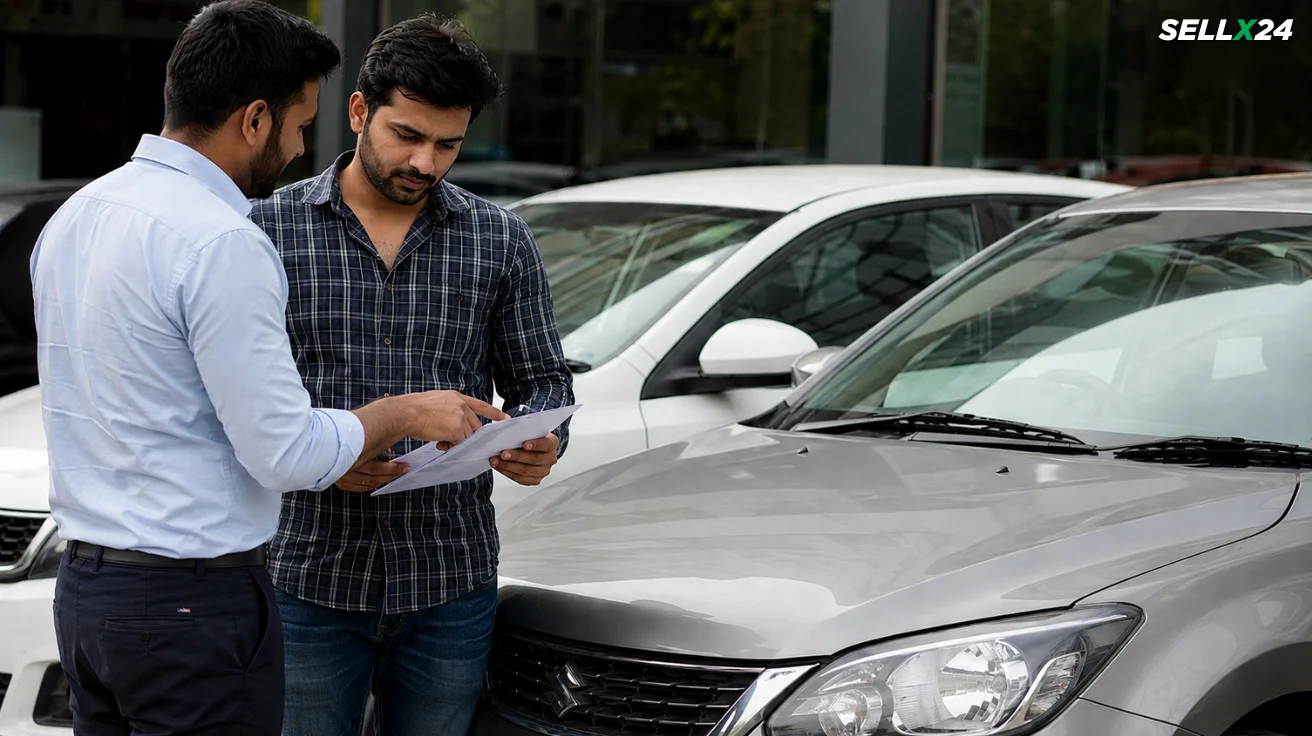
The same 2021 Baleno can cost Rs 6.2 lakh at a used car dealer and Rs 5.6 lakh from the person who actually drove it. That gap isn't a con. It's the price of convenience, and the whole dealer versus direct owner question comes down to one thing: is that convenience worth 40,000 to 80,000 rupees to you? Having spent years watching people buy used cars from both a used car dealer and a direct owner, I can tell you the answer depends less on the car and more on you.
Why this decision matters more in India than almost anywhere else
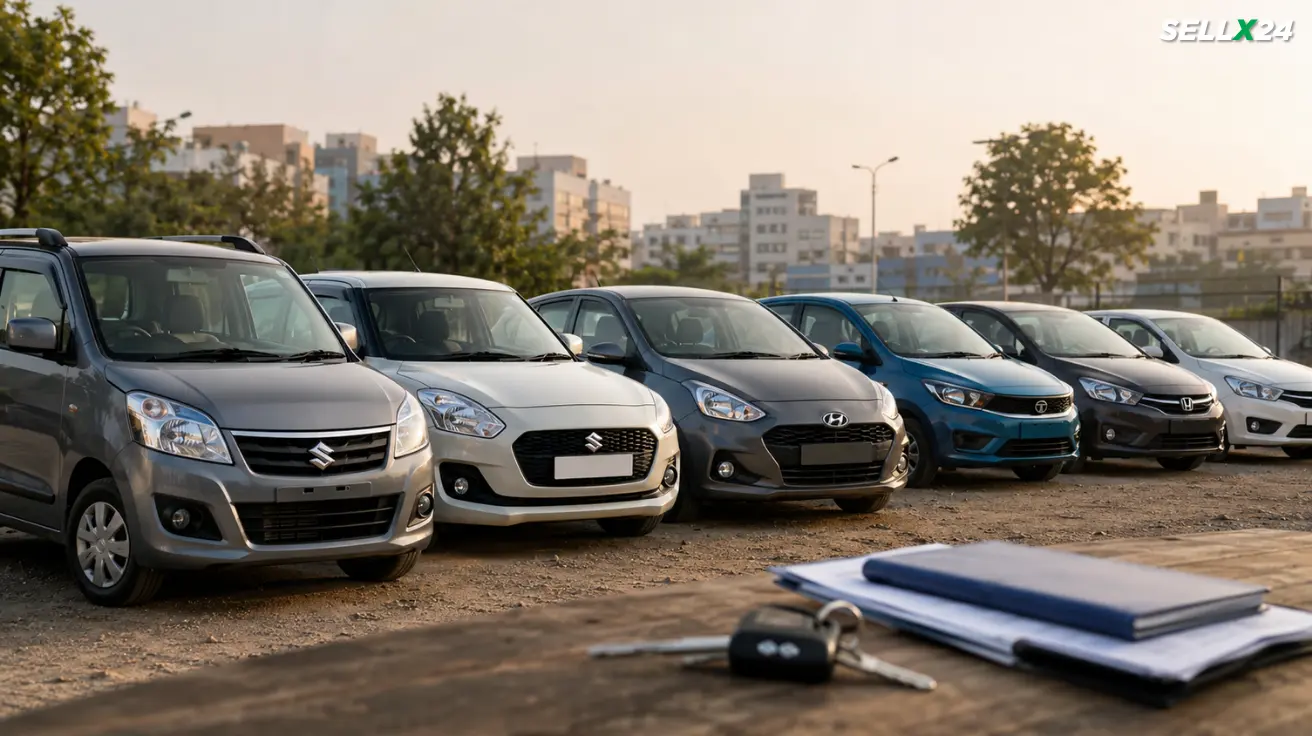
India now buys roughly 140 used cars for every 100 new ones. The pre-owned market crossed 40 billion dollars in 2025 and is growing at double digits. Here's the part most buyers miss: unorganised local dealers still handled about 70 percent of those transactions in 2025. So when someone says they bought from a dealer, that could mean a certified showroom with a warranty desk, or it could mean a plot with twelve cars, a plastic chair, and a man who knows a guy at the RTO. Those are not the same purchase. Keep that spectrum in mind through everything below.
What a used car dealer actually sells you
Strip away the balloons and the buffing, and a dealer sells four things: curation, refurbishment, paperwork, and finance.
Curation means they have already rejected the flood-damaged Dzire and the taxi with a rolled-back odometer. A good dealer's reputation dies with one bad car, so the better ones filter hard. Refurbishment means the car you see has new tyres, fresh servicing, and dent-free panels. Paperwork means the dealer files the ownership transfer, chases the RTO, and hands you a car that is legally yours. Finance is the quiet one: dealers have bank tie-ups, and for buyers without a fat cash reserve, a used car loan arranged across the desk is genuinely useful.
Certified programmes run by manufacturers add the one thing a private seller can never offer: a warranty. A 6 to 12 month engine and gearbox warranty on a used car changes the risk equation completely.
Now the honest caveat. That word certified is doing wildly different work at different dealerships. A 200-point inspection at an OEM-backed outlet is real. A laminated certificate printed in the back office of a roadside lot is decoration. Ask who honours the warranty, in writing, before you treat it as one.
Buying from a direct owner: cheaper, but you do the work
Buy direct and the dealer's margin stays in your pocket. That's the obvious win. The underrated win is information. You are sitting across from the person who drove the car for five years. You can ask why they are selling, where it was serviced, whether it has seen an accident, and watch their face while they answer. A genuine single-owner car with a full service file, bought directly, is the best value in the entire used market. I hold that opinion firmly.
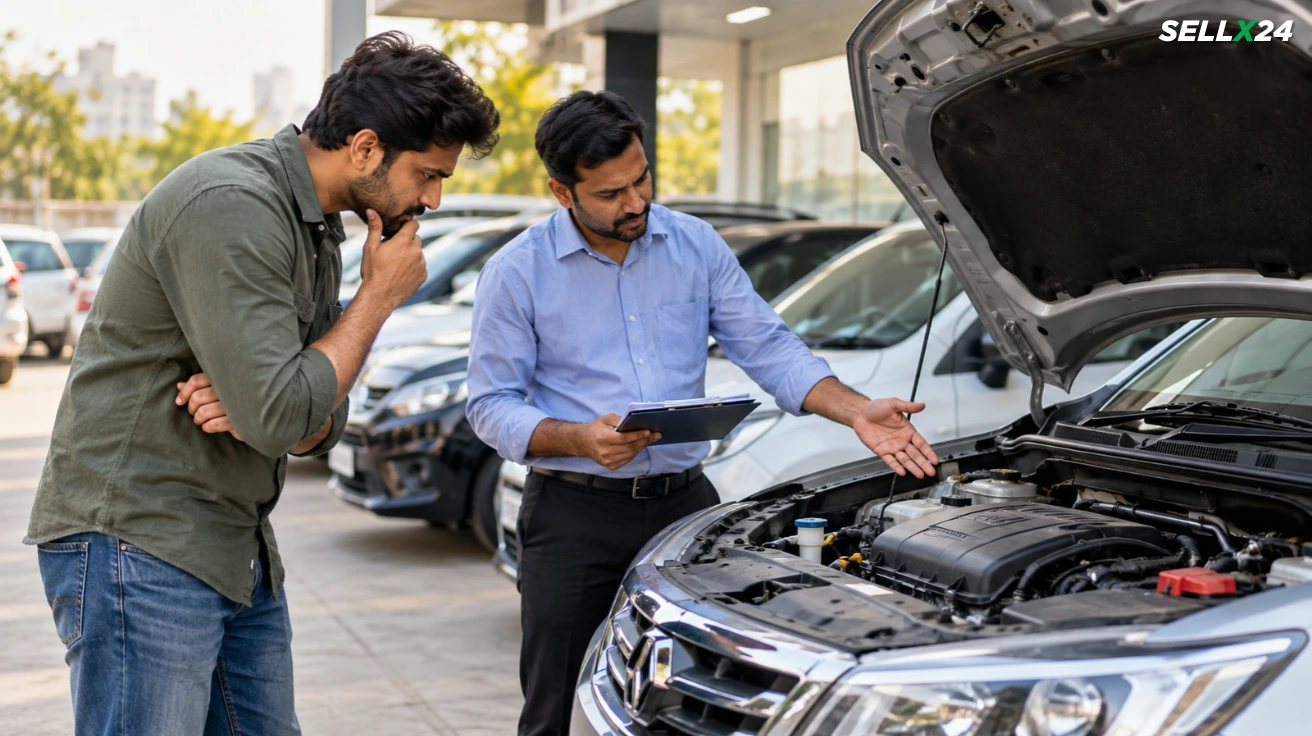
The trade is that every safety net disappears. Nobody has inspected this car except the man selling it. There's no warranty, no exchange, no showroom to walk back into if the clutch fails in month two. You arrange your own inspection, your own financing, and your own RTO visits. Budget 500 to 2,000 rupees for an independent mechanic or a doorstep inspection service, and treat it as non-negotiable. Skipping it to save a coffee-money amount on a 6 lakh purchase is how people end up owning repainted accident cars.
One more filter: you have to find the genuine seller in the first place. Classified listings are thick with brokers posing as owners, and a broker deal gives you dealer pricing with none of the dealer accountability. The test is simple. Ask to see the RC and match the name against the ID of the person in front of you. If they can't show you the RC in their own name, or the story keeps shifting, walk.
Margins and GST: where your money actually goes
Buyers negotiate better when they know the other side's economics, so here it is. Industry estimates put typical dealer margins at roughly 5 to 10 percent on mass-market cars, which works out to about 25,000 to 60,000 rupees on a mid-range hatchback or sedan, while premium cars carry fatter margins, often above 10 percent, because buyers at that level argue less.
Tax matters too. Since 16 January 2025, GST-registered dealers pay a uniform 18 percent GST on used vehicle sales, including EVs, but only on their margin, not on the full price of the car. Sell at a loss and no GST applies. A private individual selling their own car pays no GST at all. In practice the dealer bakes that tax into the sticker, which is one more structural reason a direct owner deal prices lower than the same car on a dealer's lot.
Paperwork: where used car deals actually go wrong
Most used car horror stories in India are not mechanical. They are clerical. So whichever route you choose, the checklist is the same; only the person doing the running changes.
The registration certificate must transfer to your name through Forms 29 and 30, filed with the RTO, with an NOC if the car is registered in another state. If there's a loan on the car, the seller needs a closure NOC from the financier and the hypothecation must be terminated, or you will inherit someone else's debt paperwork. Check pending challans and the blacklist status on the government's Parivahan portal before paying a rupee. Transfer the insurance within 14 days of purchase, because a policy in the old owner's name can complicate a claim.
From a direct owner, all of this is your job, and it will eat two or three half-days. A competent dealer does it for you, and that service has real value. But confirm it in writing and follow up until the new RC arrives, because some smaller lots run cars on open transfer papers for months. Until the RC carries your name, the previous owner is legally on the hook for your driving, and you have no clean title. Neither side should want that.
Also Read: How Many Years a Car Can Be Used in India: The Real Story
So where should you buy?
Buy from a reputable used car dealer if this is your first car, if you need financing, if your schedule can't absorb RTO queues, or if a warranty helps you sleep. Pay the premium, choose a certified programme where the budget allows, and treat the extra 40,000 rupees as insurance with a concierge attached.
Buy from a direct owner if you know cars or know someone who does, you are paying mostly cash, and you have the patience to inspect three or four vehicles before committing. Your reward is the best price in the market and a first-hand history no dealer invoice can match.
And two rules apply to both routes. Never skip the independent inspection, even on a certified car. Never hand over full payment before the ownership transfer is filed. The used car market in India rewards the prepared and quietly taxes everyone else. Decide what your time and risk appetite are worth, pick your side of the counter, and go in with the checklist above. The car is only half the purchase; the process is the other half.
FAQs
1. How to buy a used car from a dealer?
Shortlist the car, verify the RC, service records, and insurance, then get an independent inspection even if the dealer calls it certified. Check challans on Parivahan, negotiate the on-road price in writing, pay digitally, and confirm the dealer files Forms 29 and 30 so the RC moves to your name.
2. How much profit do dealers make on used cars?
Industry estimates put typical dealer margins at 5 to 10 percent on mass-market cars in India, roughly Rs 25,000 to Rs 60,000 per vehicle, and above 10 percent on premium models. Since January 2025, registered dealers also pay 18 percent GST, but only on that margin, never on the car's full price.
3. Is it cheaper to buy a used car from the owner?
Usually yes, because the dealer's margin, refurbishment cost, and GST are absent, so the same car often prices Rs 40,000 to Rs 80,000 lower. The trade is that you get no warranty or recourse and must arrange your own inspection, financing, and RTO transfer, so the saving comes with work attached.
4. What documents should I check when buying from a direct owner?
Check the RC in the seller's own name, service history, valid insurance, PUC certificate, and a loan closure NOC if the car was financed. Verify pending challans and blacklist status on Parivahan, then file Forms 29 and 30 for ownership transfer and move the insurance to your name within 14 days.
5. Does GST apply when buying a used car from an individual?
No. Private individuals selling their own cars are fully exempt from GST in India. The 18 percent rate applies only to GST-registered dealers, and even then only on their profit margin under the margin scheme, not the sale price. If a dealer sells a vehicle at a loss, no GST is payable on that deal.